Why Plants Decline Indoors: Common Causes in Commercial Spaces
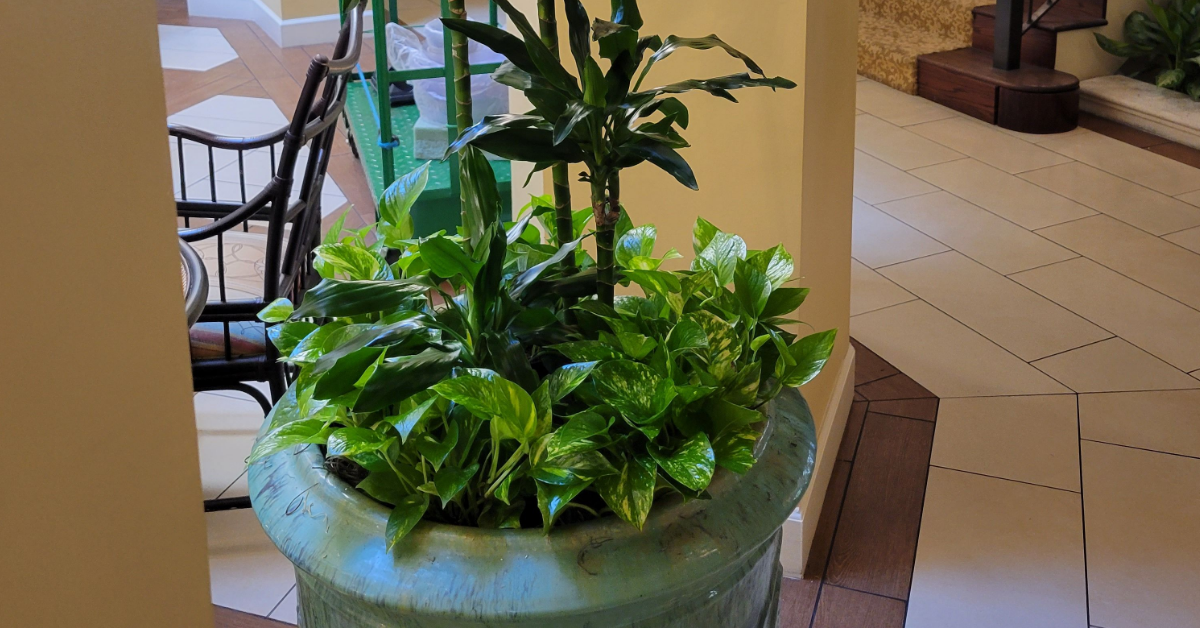
Why does the ficus by the elevator look tired while the one by the window looks fine?
Plants rarely decline for one dramatic reason. It’s usually a slow mismatch between the plant and the spot it’s in. Too little light. Too much water. Cold air from a vent. A few pests that hitched a ride.
In commercial spaces, these problems are common and easy to miss. Here’s what causes most indoor plant decline, and what it takes to prevent it.
Light: The Most Common Mismatch
Light is food for a plant. Indoors, there’s far less of it than most people think.
A spot that looks bright to your eyes may be dim for a plant. Overhead fluorescent or LED fixtures help, but they rarely match a sunny window. Interior offices, hallways, and elevator lobbies can be very low light.
Research from UF/IFAS on interior maintenance of foliage plants shows how closely plant quality indoors depends on light levels. Plants placed below their needs slowly use up their reserves. You’ll see leggy growth, pale leaves, and leaf drop.
The fix starts before installation. Choose plants that match the light in each spot. A ZZ plant or a cast iron plant can handle a dim corridor. A fiddle leaf fig needs a bright window.
Acclimation matters too. Plants grown in full Florida sun can struggle when moved straight indoors. Every plant we install is acclimated, or shade-conditioned for indoor light, in our greenhouse first. Our design consultants plan each placement around the light, humidity, and temperature of the space. You can explore species in our plant guide.
Watering, Drainage, and Air Conditioning
More plants are lost to too much water than too little. When soil stays soggy, roots can’t get air. They start to rot, and the plant can’t take up water at all.
The signs look a lot like underwatering. Leaves wilt, yellow, and drop. University of Maryland Extension notes that overwatered plants often show dieback even though the soil is wet.
Drainage is the hidden piece. Decorative containers often have no holes. Water collects at the bottom where nobody sees it. A well-meaning employee with a watering can makes it worse.
Florida adds another factor: air conditioning. Most commercial buildings here run it most of the year. That keeps rooms cool and dry, and it can blow cold air right onto plants near vents. Leaves dry at the edges, and plants near supply vents can stress quickly.
The answer is a steady routine. Our technicians typically visit weekly or biweekly, based on what each plant needs. They check soil moisture, adjust watering, and watch for early stress before it spreads.
Pests and How They Spread Indoors
Indoor pests are small, slow, and easy to overlook. By the time someone notices, the problem has often moved from one plant to several.
The usual suspects are mealybugs, scale, spider mites, and fungus gnats. Penn State Extension describes how these pests feed on leaves and stems, leaving sticky residue, speckled leaves, or webbing behind.
They spread in simple ways. A new plant arrives already infested. Plants touch each other in a planter. Insects move on hands, tools, and air currents. Stressed plants, especially those short on light or overwatered, tend to be hit harder.
Prevention starts at the source. Every plant we install is pest-treated and inspected in our greenhouse before it reaches your building. That lowers the chance of bringing problems in.
Ongoing visits catch the rest. Technicians look under leaves and along stems where pests hide. We use eco-friendly pest control methods, and we track every plant and visit in Greenscan, our in-house barcode system. That record helps our team spot patterns early.
Frequently Asked Questions
Why do office plants turn yellow?
Yellow leaves usually point to a care mismatch. The most common causes are overwatering, poor drainage, low light, and cold air from vents. Older lower leaves may also yellow naturally as a plant grows. If many leaves yellow at once, check the soil moisture and the light first. A trained technician can usually narrow it down quickly.
Can a declining plant be saved?
Sometimes. If the roots are still healthy, fixing light, watering, or pest problems can bring a plant back. If roots have rotted or the plant has lost most of its leaves, recovery is slow and may not be worth it in a commercial space. In those cases, swapping in a healthy, acclimated plant keeps the space looking right.
What happens if a leased plant declines?
It depends on your agreement. Under a Lease, we replace declining plants at no additional cost. Under Guaranteed Maintenance, which covers client-owned plants, replacements are also at no additional cost. Under Maintenance Only, replacements aren’t included, but we can quote them. You’ll find more detail on our frequently asked questions page.
Let Our Technicians Handle the Care
Most indoor plant decline comes down to a few causes. Light that doesn’t match the plant. Water that sits too long. Cold, dry air. Pests that spread quietly.
Each one is preventable with the right plan and a steady routine. That’s what keeps a lobby, a conference room, or a medical office looking cared for every day.
Our approach covers the whole process. Design consultants choose plants that suit each spot. Our greenhouse acclimates, leaches, pest-treats, and inspects every plant before installation. Technicians handle the ongoing care, and Greenscan keeps a record of every visit.
With plant leasing, the plants, containers, delivery, installation, and ongoing maintenance are all part of the quote. Your team doesn’t have to think about watering schedules or yellow leaves.
We’ve been caring for plants in Florida businesses for over four decades. Tropex offers a free, no-obligation design consultation. Schedule your free design consultation or call (800) 874-8712 to get started.